Česky

for those interested
Admissions Process – Lower Secondary School


The path to your child’s independence, discovery and further development
The second stage at Cesta k úspěchu Primary School continues to develop our pupils’ skills and knowledge. In a friendly and motivating environment, they learn to make connections between subjects, think in a contextualised way and discover what truly interests them. We focus on biology, physics, social sciences and other areas in such a way that everything makes sense and has practical applications. The children learn to discuss, defend their views, work as a team and carry out their work not only at their desks, but also outdoors, in the laboratory or during project days. As a result, they gain confidence, healthy self-esteem and a desire to keep moving forward. We focus on fostering intrinsic motivation and provide space for the individual growth of all our pupils.

What makes us different?
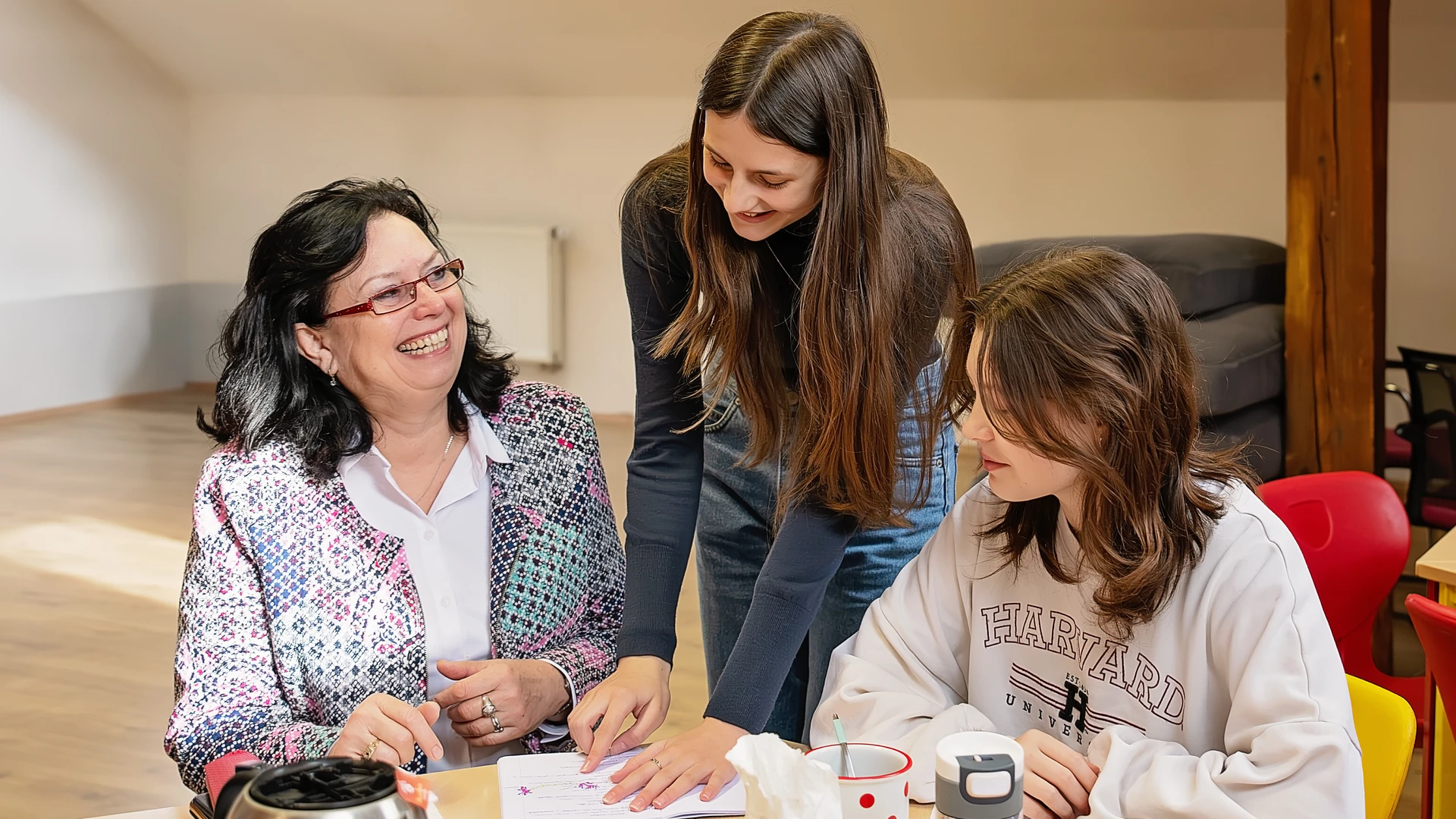
Every pupil follows a path that suits their needs and pace. Whether they start in Year 0, Year 1 or join the school later, they have access to all the opportunities the school has to offer. Class teachers give each child individual attention and work together with them and their parents to foster a positive classroom atmosphere.
From rote learning to understanding
We teach in context, building on discovery and the meaningful linking of knowledge.
Advanced Mathematics and Czech
Integrated subjects
Form period in the timetable
Induction course and days with the form tutor
Trust rather than control
How does the admissions process work?
What pupils learn and how they develop
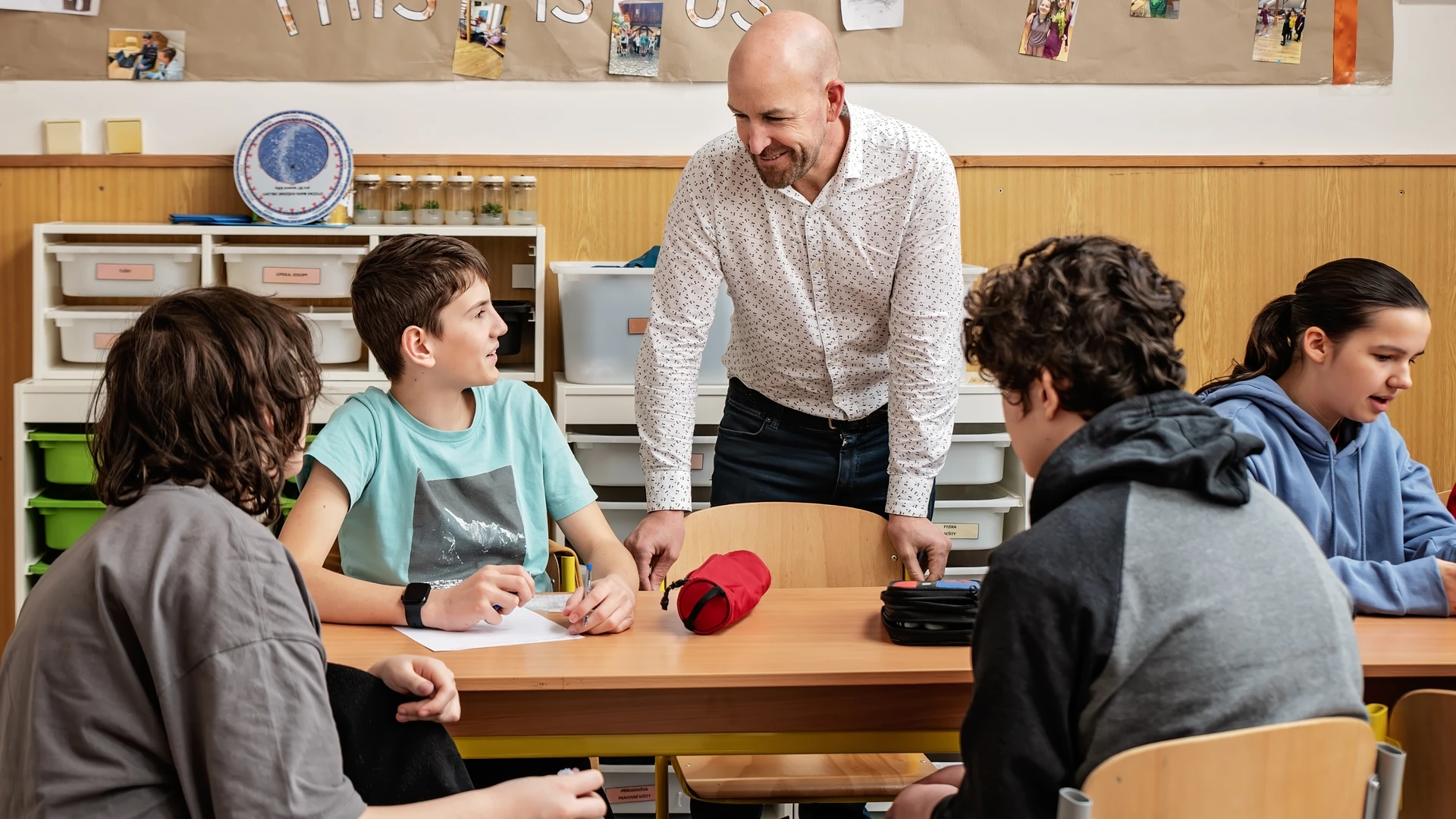
In the secondary cycle, we guide pupils towards independence, critical thinking and the ability to apply their knowledge to the real world. We teach them not only to find the right answers, but above all to ask meaningful questions. Personal development, intrinsic motivation and the ability to work together are just as important to us as the curriculum itself.
The unique approach to teaching at the Cesta k úspěchu school is further supported by the individualised timetable for each class. The layout of the desks is adapted to the subjects, the pupils’ needs and other situations. The children learn both indoors and in real-world settings – in the science laboratory, the school garden, the project workshop or the kitchen. This gives them the opportunity to put the knowledge they have acquired directly into practice and to better understand the connections that make learning meaningful to them.
Critical thinking and identifying connections
We teach pupils to ask probing questions, to discuss issues and to defend their views. We show them how to identify connections between pieces of information and thus understand the wider context.
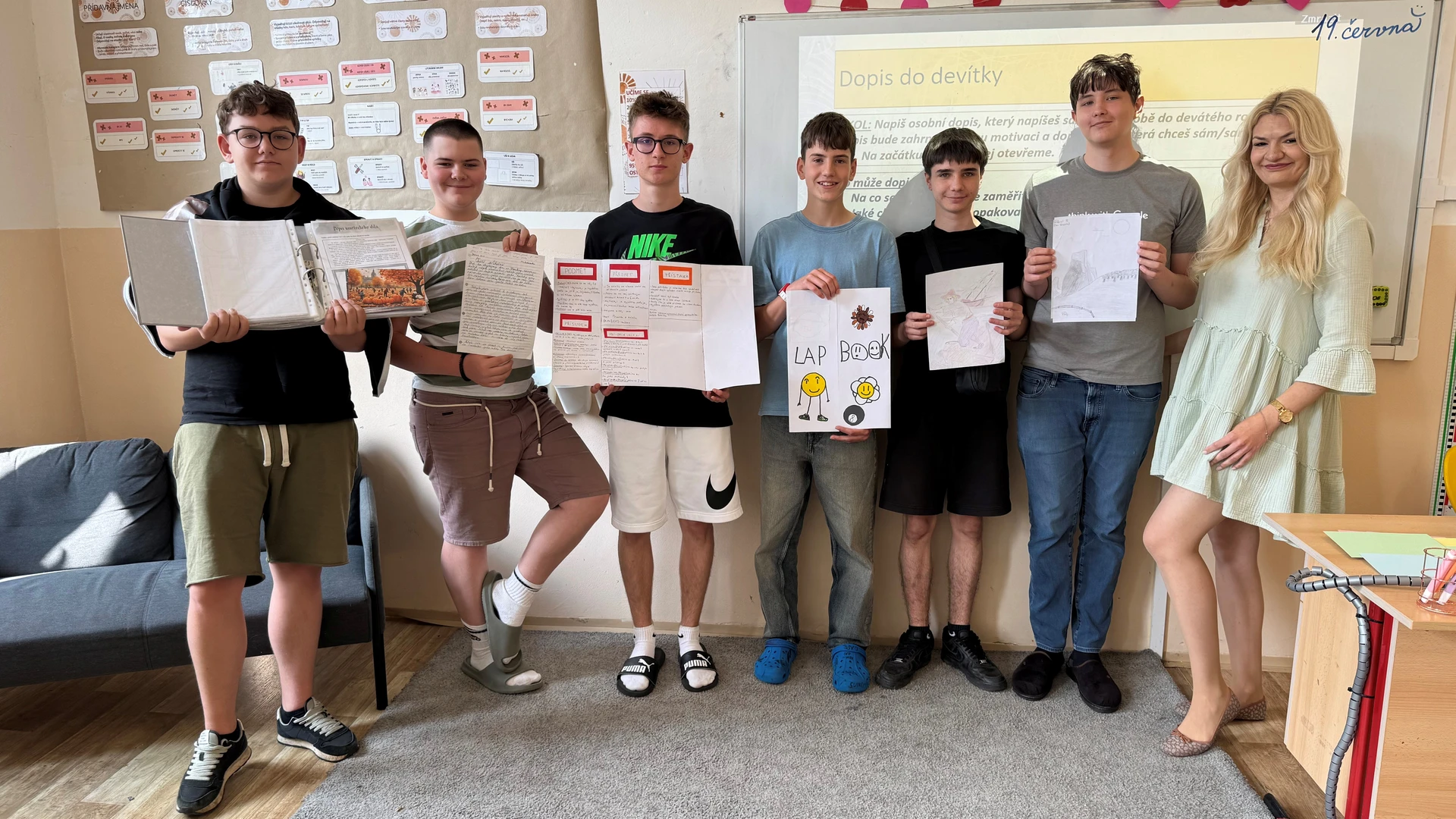
Presentation of our own projects and outputs
Teamwork and dealing with real-life situations
Developing your own approach to learning
Writing a final thesis and the public defence
How we develop Czech, English and maths in lower secondary school
Every pupil follows a path that suits their needs and pace. Whether they start in Year 0, Year 1 or join the school later, they have access to all the opportunities the school has to offer. Class teachers give each child individual attention and work together with them and their parents to foster a positive classroom atmosphere.
The Czech language – the art of expressing an idea
At secondary level, we guide pupils towards a deeper understanding of texts, precise expression and refined speech. They develop their ability to argue a case, compose essays and literary texts, and learn to use language as a tool for independent thinking. Lessons integrate stylistics, literature and grammar within a meaningful context, with an emphasis on the quality of texts, presentations and speech.
English – a language as a natural tool
Mathematics – Logic in Everyday Life
Preparation for entrance exams in Czech and mathematics

How integrated science teaching works in our school
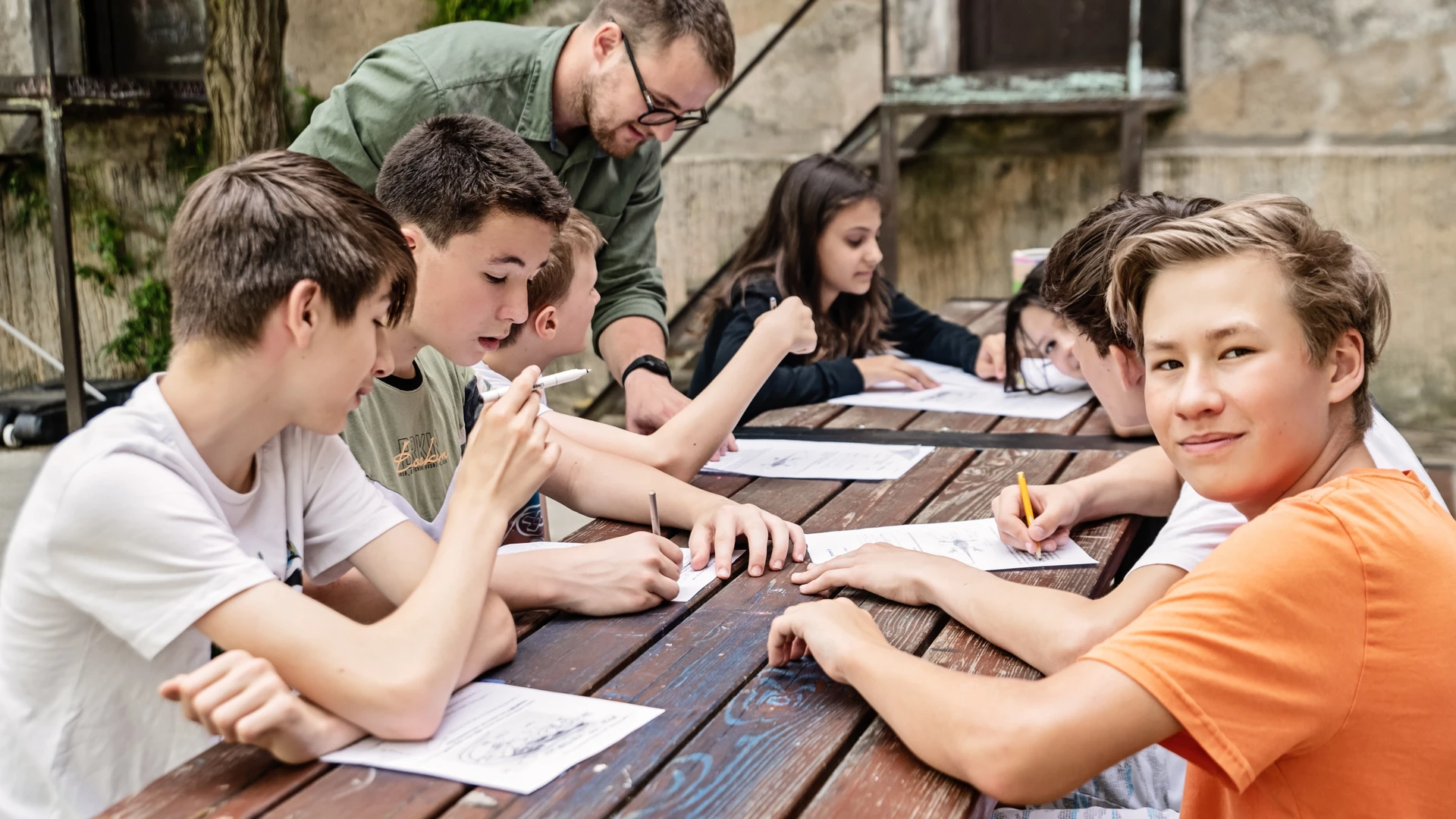
At secondary level, we teach biology, chemistry, physics and health education in an interlinked manner. We do not simply teach pupils from textbooks, but guide them to discover the world around them through their own eyes – in the laboratory, in the school garden and out in the field. For us, theory is merely a starting point. The real learning happens when pupils can try things out for themselves, measure them, record their findings, observe and understand in context; that is why they take part in growing plants, monitor the development of animals right here at school, or experience first-hand how the volume of various substances changes. Instead of rote teaching, they engage in research projects, experiments, teamwork and real-life situations that show them the practical value of learning. Teaching thus becomes lively, natural and connected to the everyday world.
What enriches our pupils
- They explore the natural sciences in practice, not just from textbooks.
- They grow plants, study animal behaviour, rear and observe living organisms, and carry out their own experiments.
- They work with laboratory equipment, a 3D printer and modern apps.
- They learn about the human body, health, nutrition and first aid through hands-on experiences and simulations.
- They link knowledge across subjects and, as a result, understand how the world around them works.
A quick overview of secondary education
Years
Years 6–9
Number of pupils in the class
18 - 22
Number of foreign languages
2 (English and Spanish as a second language)
Language of instruction
Czech language + a natural bilingual environment (English used in day-to-day operations)
Tuition fees
9,990 CZK per month (Years 7, 8 and 9, 2026/2027)
12,000 CZK per month (Year 6, 2026/2027)
IT and Technology Lessons
With a focus on digital literacy, working with AI, programming and 3D printing
Mathematics
Pupils tackle real-life problems and develop their logical thinking, strategic thinking and independent reasoning.
Natural Sciences
Linking subject matter across disciplines (e.g. biology + chemistry + physics)
Reviews
Verbal and percentage-based assessment with an emphasis on motivation
Opportunities for exceptional development
School projects, final-year projects
Transition to secondary school
Intensive preparation for secondary school and grammar school entrance exams in the form of courses
Application for secondary education

Would you like to know more?
Please get in touch and we’ll arrange a meeting where we’ll provide you with more detailed information about the school, teaching, lessons, teachers and much more.
Arrange a meeting