Česky

Science laboratory


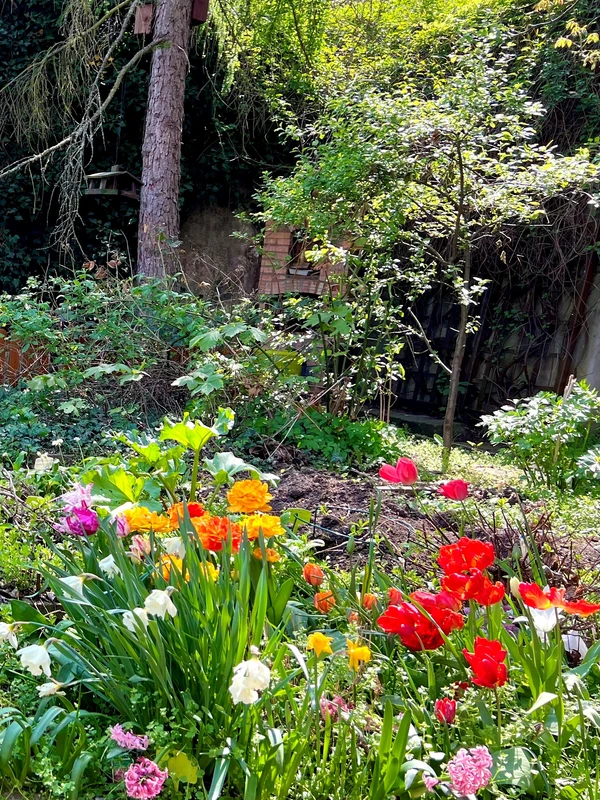

A living textbook on nature
How a garden enriches teaching
- The subject matter isn’t confined to the books.
- Pupils observe plants and animals directly in the garden, follow their life cycles and learn to understand the interconnections in nature.
- The garden allows us to link different subjects, such as biology and chemistry, through various experiments.
- Caring for plants helps to foster a sense of responsibility. Pupils also take practical skills back with them to apply in their everyday lives.
Practical Botany and Observing Animals in the Garden
We use the garden during morning lessons and in the afternoon natural history seminar, and we regularly observe wild birds and insects there. Six bird boxes and one bird feeder are placed in the treetops. Cameras have been installed in two of the boxes and the feeder, which enrich our biology lessons by allowing us to observe first-hand the nesting and hatching of the young of the great tit, the redstart and the blackbird.
From chemical formula to homemade cider
One of our pupils’ favourite activities is working with grapevines. The pupils look after the vines, harvest the grapes in the autumn and, in their chemistry lessons, investigate what happens during fermentation. They learn how yeast converts sugars into carbon dioxide and alcohol, how ‘burčák’ is produced, and how it differs from grape must and wine. They don’t just stick to formulas; they try out the whole process in practice. They destem the grapes, crush them and press them gently, monitoring the temperature and ensuring hygiene whilst working. The result is homemade grape must, which tastes of fruit from their own harvest and, at the same time, reminds them that chemistry is all around us. After tasting the must together, we inoculate it with the wine yeast Saccharomyces cerevisiae and observe the alcoholic fermentation and production of carbon dioxide.
Would you like to know more?

School premises