Česky

Kitchenette


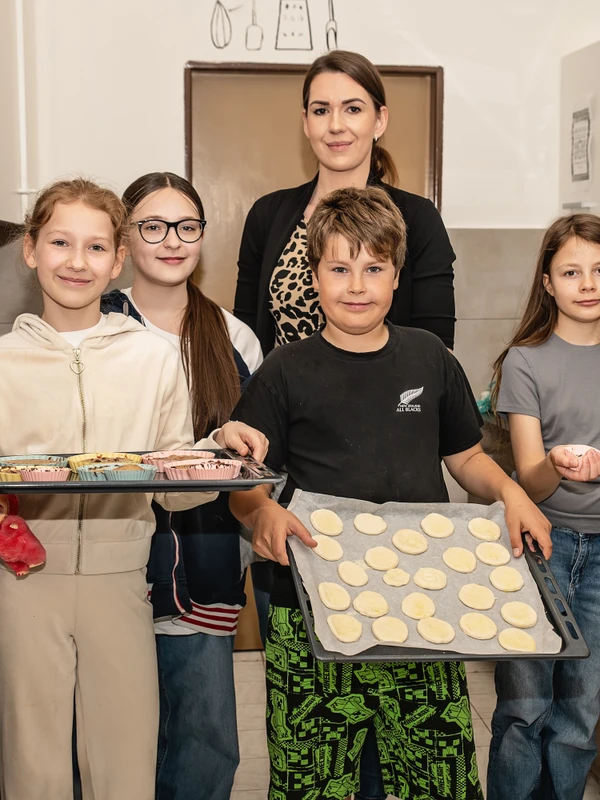

Science in the kitchen and on the plate
How the kitchen enriches teaching
- Using real-life examples from maths, pupils convert ratios.
- They can try out physical and chemical principles in practice.
- They gain useful practical skills for everyday life.
Strategy and improvisation in practice
Cooking in English
The afternoon ‘Cooking in English’ course combines English with cooking so that children learn the language naturally in real-life situations. Pupils learn vocabulary relating to ingredients, kitchen utensils and cooking methods, as well as useful phrases for communicating within a team, following instructions and describing flavours. With a native speaker, they practise speaking, read short recipes, write shopping lists, measure and convert quantities, and follow instructions in English. The course covers health and safety at work, developing teamwork and taking turns in different roles whilst preparing food. During lessons, they are introduced to cuisines and cultures from around the world, discover new ingredients and learn to prepare a variety of recipes. Lessons take place in small groups so that everyone has the opportunity to get stuck in. As English is spoken exclusively, the children practise the language naturally with the tutor and amongst themselves, whilst having lots of fun.
Would you like to know more?

School premises